
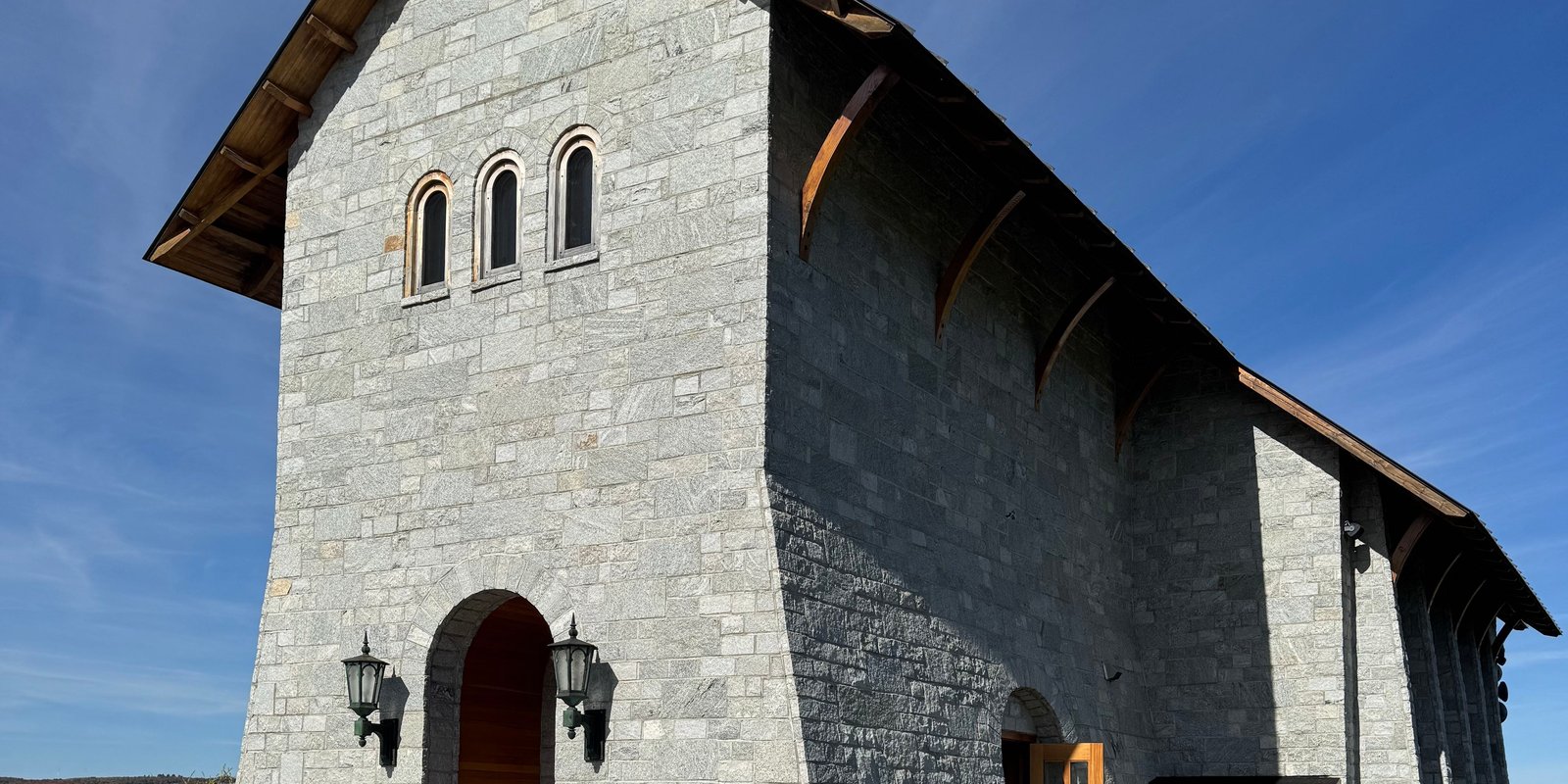

Photo is the Chapel of the Holy Family in East Burke, Vermont, where I mountain bike. Great place to meditate.
I want to preface two things. First, the memoir is a series of vignettes that are nonlinear. The narrative jumps around in time, connected by various themes and symbols—such as faith, mortality, body, soul—instead of a linear plot. It also mirrors how flashes of a specific memory can flood your mind at any moment, triggered by your senses, the smell of apple pie or Pearl Jam pops up on your playlist.
Since memories can appear vague, I had to interview family members, who, in essence, were historians. I am grateful my aunts and cousins helped shape my mother's story, describing hazy events in my youth, and numerous stories about her teenage years. As I often note, my mother was an ordinary person doing extraordinary things in her short life. And I truly believe this is common among a majority of people on this planet.
Opening Vignette (Chapter One—if there were chapters)
“Why are we going to church?"
It was a midweek morning during summer vacation, and I was missing a kickball game—free and fun recreation for all of us kids in our neighborhood.
“I need to confess my sins, and you, do too, Steve,” my mother said, taking her eyes off the road to smile at me momentarily. Her dimples curled. Her ivory teeth glistened.
“Confess? Why?”
“Because I want to go to Heaven, and you should too,” my mother answered quickly, glancing at me with another broad and winsome smile.
“How do you know Heaven exists?” At eleven years old, I knew only of Heaven as a place where dreams might, if I remained free of sin, come true. But on this morning, that place, where wonderful things most certainly occurred absent of sin, was my elementary school gym, a place where my friends were running around, kicking and dodging and throwing a rubber red ball furiously. I was skeptical about dreams materializing in an empty, musty church, where the oppressive smell of frankincense and myrrh would certainly cling to my clothes for the rest of the day, reminding me that play and church differed greatly.
“I don’t know if Heaven exists,” my mother said. She did not smile this time. She was fixated on the road ahead, surrounded by sluggish cars scorched by a sweltering sun.
We were in a 1977 Ford LTD, a behemoth mound of brown-coated metal barely controlled by my mother, who rarely drove while she was married to my father, making her experience of driving a car with power steering profoundly limited. She liked to grip the steering wheel at the eleven and one o’clock positions instead of the preferred ten and two o’clock. This made her knuckles look like teeth biting into the sun-baked dash. With her body only inches from the steering wheel, wearing bug-eyed sunglasses of the ‘70s, which she loved and would not be seen in public without, my mother looked like a praying mantis piloting a battleship. When she drove, the car swayed to and fro, drifting across the median, buoyed by some mysterious force. I did not have the heart to tell her that I felt far safer when my older sister, Chris, who had just received her learner’s permit, drove the battleship. Such a proclamation would have caused more injury to an already broken heart. Plus, I often thought the mysterious force that kept the car from careening off the road while my mother drove had something to do with her indefatigable belief in a higher power and her longing to be free of sin.
Dutiful. That was my mother, Anne Rose Morrell Rand, a devout Catholic, who believed entrance into such a precious kingdom—a wondrous paradise in her mind—must be earned with conviction. So she prayed ceaselessly: in the morning before her low-wage work as a secretary for the local community college; in the car while delivering her three exuberant children to sporting events; during dinner after preparing a meal that drained the last of her day’s vitality. Just before bed, when it was quiet and dark, she prayed steadfastly, prayed unshakably, prayed passionately. She liked to kneel, with her arms worn like frayed ropes, tethering her body to a neatly arranged bed about to absorb the last of her sweat, and incant Hail Marys. Her forehead resting against her thumbs. Her hands clasping a rosary dangling like a lure. Her prayers were in her eyes, in her gait, and in her dreams of an everlasting life.
“Why go to church if Heaven does not exist?” I was flummoxed, twisting a Rubik’s Cube in the front seat of the brown battleship next to my mother, my towhead barely above the dashboard, glancing from the cube of colors to a bright, summer-day sun, wondering if Heaven had night and day or if I would ever see an angel fall from the sky. I imagined angels often, mostly at night, after praying, and just before sleep. They played on the walls—shadowy wisps encircling my younger brother and me—dancing in the moonlight like marionettes on strings, prancing and jigging to the whims I conjured.
“I go to church to remind myself that I do not need to know for sure that Heaven exists. I just need to have faith that it does.”
My mother turned into the parking lot of Immaculate Heart of Mary, a small Roman Catholic church made of red bricks near our house in Corning, New York. The car lacked grace as it bounced into an empty space. My mother parked near the entrance and stashed her sunglasses in her purse. Then she looked at me. “Let’s go to confession, then meet with Father Rogers about you becoming an altar boy.”